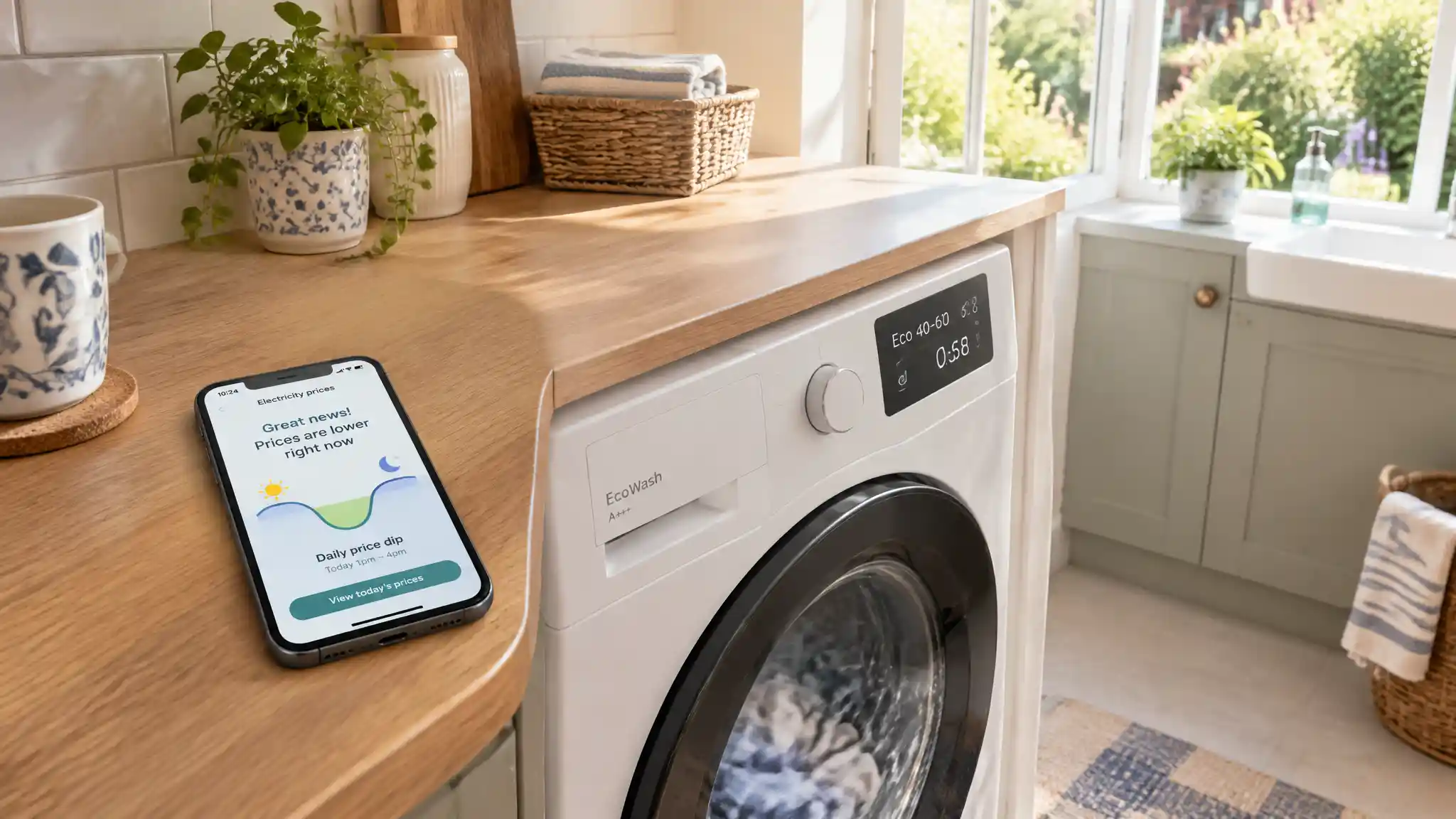
The Flat-Rate Lie: Why Your Current Energy Bill is Unfair
Most energy bills work on a flat rate. Right now, that's around 32p per kWh under the Ofgem price cap. You pay that price whether you run your washing machine at 3am or at 6pm. Same appliance, same electricity, same price. Sounds fair. It isn't.
Here's the bit your supplier doesn't put on the bill: the grid itself doesn't cost the same at 3am as it does at 6pm. Overnight, most of the country is asleep. Demand drops. Wind farms often keep spinning anyway. Electricity is genuinely cheap and plentiful.
At 6pm, everyone gets home, puts the oven on, and flicks the heating up at once. Demand spikes hard. The grid has to call in its most expensive power stations just to keep up. That's when electricity really costs money.
A flat rate blends the cheap 3am price and the expensive 6pm price into one number, and charges you that number all day. If you mostly use electricity in the evening, you're getting a quiet discount. If you could shift your usage to the cheap hours, you're quietly overpaying — every single day.
The Agile Trick: Surfing the 30-Minute Price Waves
Octopus Agile throws the flat rate out. Instead, the price updates every 30 minutes, based on what electricity actually costs on the wholesale market at that moment. Tomorrow's prices are published the afternoon before, right in the app.
Think of it like train tickets. A peak-time ticket costs more than an off-peak one for the exact same journey. Or think of Uber surge pricing: the fare goes up when everyone wants a ride at once, and drops when the roads are quiet. Agile does the same thing to your electricity, in 30-minute slots, all day long.
Once you can see the price coming, the game becomes simple: move your heaviest chores into the cheapest slots. You don't need to change what you use — just when.
- Dishwasher — set it running overnight instead of after dinner.
- Tumble dryer — one of the hungriest appliances in the house; schedule it for the cheapest window you can find.
- Home battery — charge it up cheap overnight, then use that stored power during the expensive evening peak instead of buying at full price.
- EV charging — plug in overnight and let the car fill up while the grid is quiet.
Overnight Agile slots regularly land under 15p per kWh, sometimes well under. Compare that to the 32p per kWh flat rate, and shifting even a few chores is real money back in your pocket every week.
The Ultimate Prize: What are "Plunge Pricing" Hours?
Now for the fun part. Sometimes the price doesn't just drop — it goes negative.
It happens when the wind is blowing hard overnight, or the sun is flooding the grid with solar on a quiet weekend afternoon. There's suddenly more electricity on the system than anyone needs. Rather than switch generators off, the grid effectively pays people to soak up the surplus.
Octopus calls these Plunge Pricing hours, and when one hits, the tariff genuinely pays you to use electricity. Plug in the car, run the dryer, charge the battery — and watch your balance go up instead of down.
You can't predict exactly when Plunge Pricing will strike, but the app will tell you the moment it's coming. Turn on price alerts, and let a windy Tuesday night work in your favour.
Cross-Linking
This household-level trick and the big commercial energy market run on exactly the same logic. If you want to see how the same negative-pricing effect plays out at grid scale — and why it's actually becoming a headache for solar power plant owners — read our deeper dive: The Negative-Price Hours Trap.
Ready to start surfing the price waves yourself? Switch to Octopus Energy and grab your £50 bill credit — then open the app, find tomorrow's cheapest hour, and put the washing on.