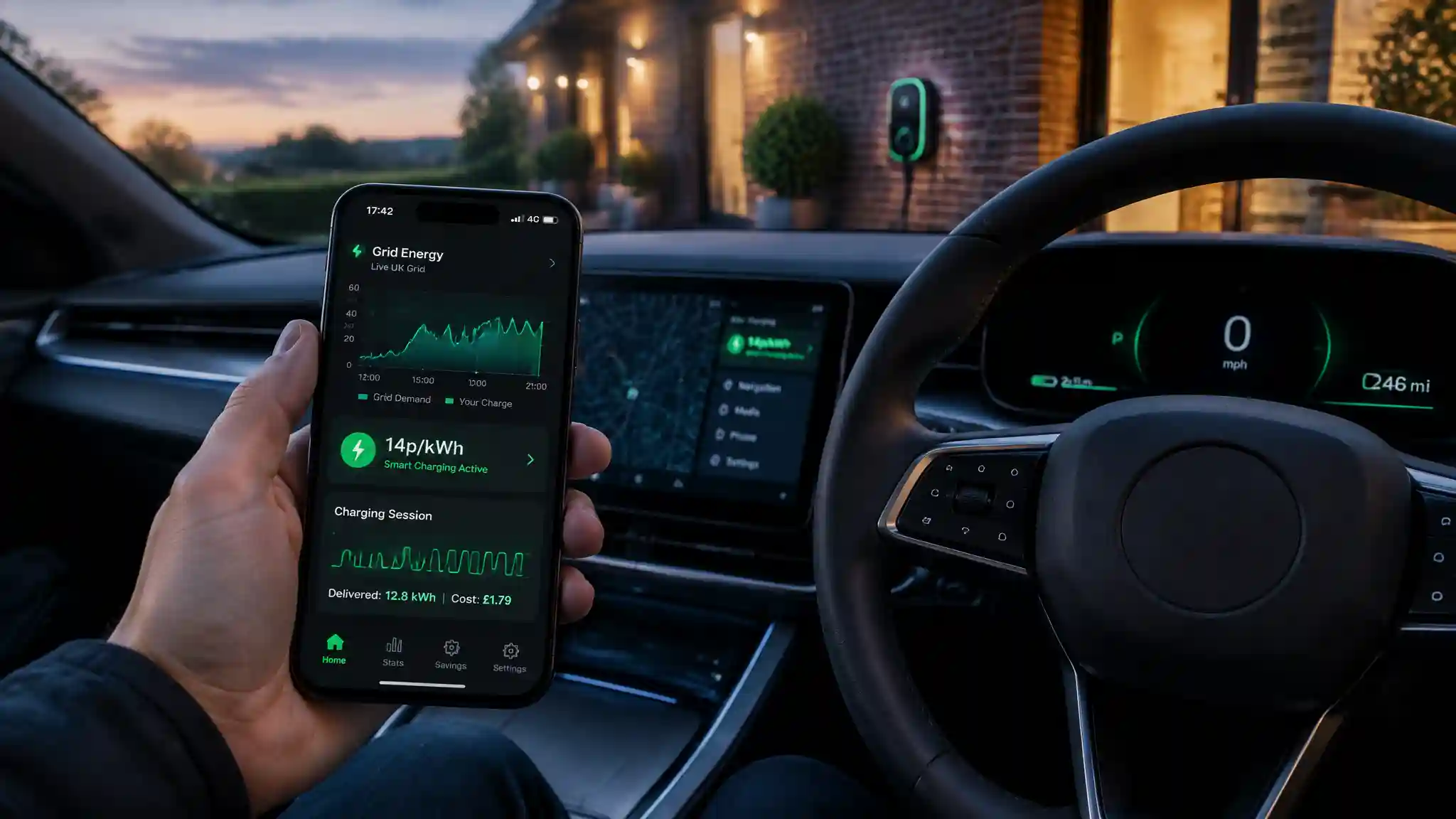
For most of the past decade, UK EV tariffs have been built around a single assumption: cheap power happens overnight. Drivers were handed a fixed window, typically midnight to 5am, and told to plug in and wait. That model treats the grid as static when it is anything but. Wind and solar output now swing sharply across the day, and a rigid overnight slot captures only a fraction of the resulting low-cost periods.
Dynamic pulse charging replaces the timetable with software. OVO's Charge Anytime runs on Kaluza's intelligent platform, which continuously polls grid conditions. When a sudden surge in renewable generation drops wholesale prices, the system triggers an automated dispatch window and pulses energy to the vehicle, even during peak daytime hours. Throughout, the rest of the household's consumption stays on its standard tariff, so only the car's smart-charged kilowatt-hours are billed at the discounted rate.
The pricing is equally straightforward. Charge Anytime offers a flat smart charging rate of 14p/kWh on pay-as-you-go, or structured monthly subscription tiers starting at £27.50 per month for drivers and businesses who want predictable budgeting. Either way, the rate applies whenever the platform chooses to charge, not only between midnight and 5am.
From the driver's side, none of this complexity is visible. Users simply set a ready-by time and target charge level in their vehicle or charger app. Behind that seamless interface, the platform translates each driver's flexibility into automated grid balancing, aggregating thousands of vehicles into a controllable load that absorbs surplus generation and eases pressure at peaks. The strategic takeaway for fleet managers, installers and housebuilders is clear: value is migrating from the tariff to the algorithm, and hardware compatibility with smart platforms should now be a core procurement criterion.