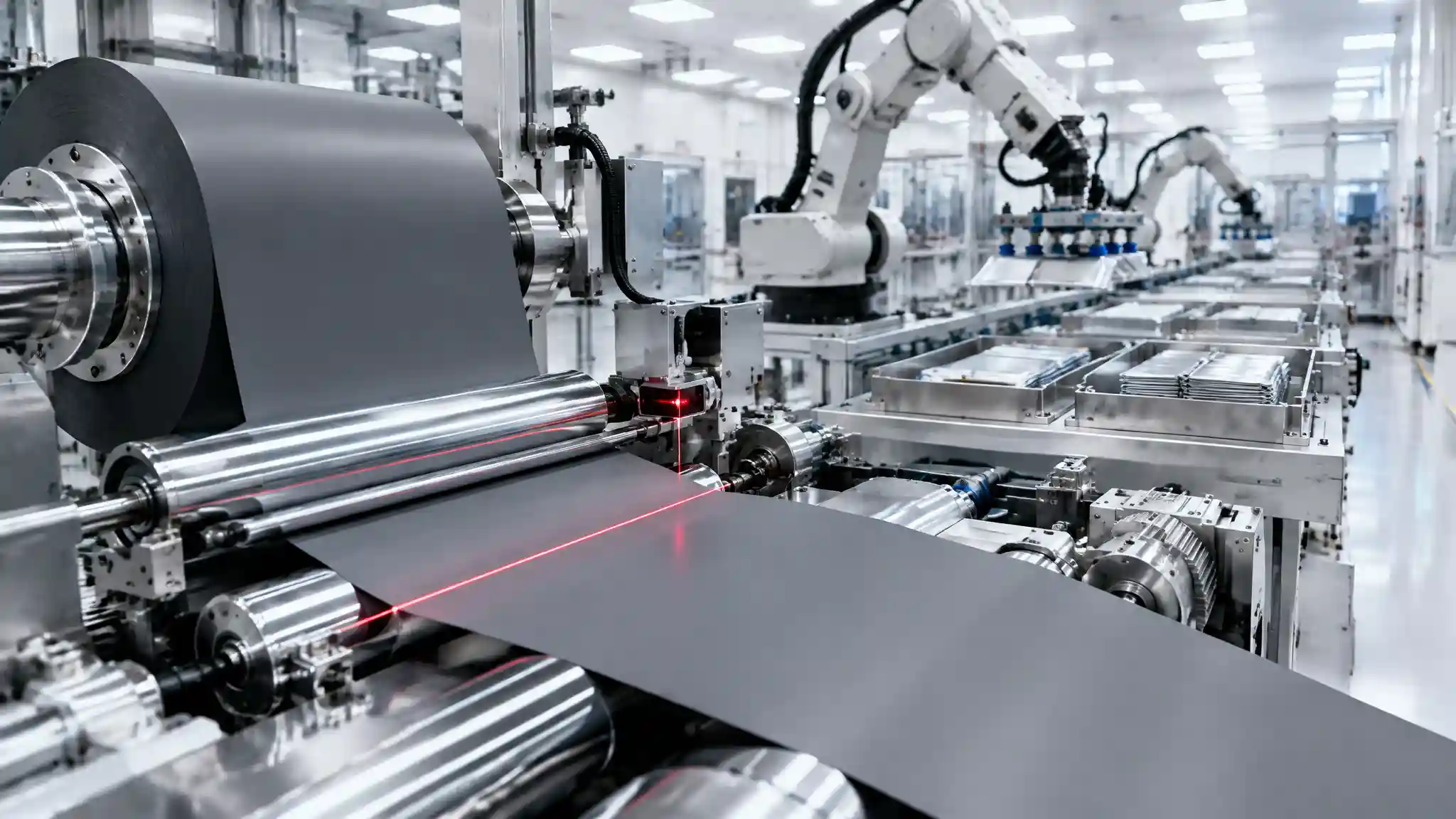
Conventional lithium-ion lines are built around flexible electrodes running through tension-controlled roller systems at high speed. Brittle oxide ceramic and sulfide sheets do not yield under that tension. They micro-tear, and manufacturers are forced to slow lines by up to 70%, which undermines the amortisation of every downstream asset and makes standardised throughput targets unreachable.
The atmosphere is the second constraint. Sulfide-based architectures need a dry-room ceiling between -40°C and -60°C dewpoint, because moisture ingress forms lethal hydrogen sulfide (H2S) gas and degrades the electrolyte. Holding that condition across a gigafactory floor can inflate HVAC running costs by up to 400%, a specialised overhead absent from liquid-electrolyte production.
| Production line | Equipment compatibility | Atmospheric dewpoint constraint | Line yield target | Capital expenditure multiplier |
|---|---|---|---|---|
| Traditional Lithium-Ion | Full compatibility with standard high-speed roll-to-roll coating, calendering and winding | Standard dry-room control | Mature, high-volume yields | 1.0x (baseline) |
| Sulfide Solid-State | Pouch-cell stacking semi-compatible; slurry mixing, calendering and high-pressure pressing need bespoke lines | -40°C to -60°C ceiling to prevent H2S formation | Not disclosed; web breakage limits throughput | Not disclosed; HVAC running costs up to 400% higher |
| Oxide Ceramic Solid-State | Pouch-cell stacking semi-compatible; brittle sheets need bespoke handling and pressing hardware | Less severe than sulfide; no H2S formation risk | Not disclosed; micro-cracking limits yield | Not disclosed; bespoke hardware lines required |
Capital equipment forms the third rift. Pouch-cell stacking equipment remains semi-compatible, but slurry mixing, calendering and high-pressure hot-isostatic pressing stages require entirely new, bespoke hardware lines. Existing lithium-ion assets therefore cannot be localised into solid-state output through modest retrofits.
For plant managers and automation investors, the practical implication is that process engineering, not cell chemistry, now sets the timeline. Credible roadmaps must show web-handling solutions, dry-room economics and a reusable-asset ratio before volume commitments are made.