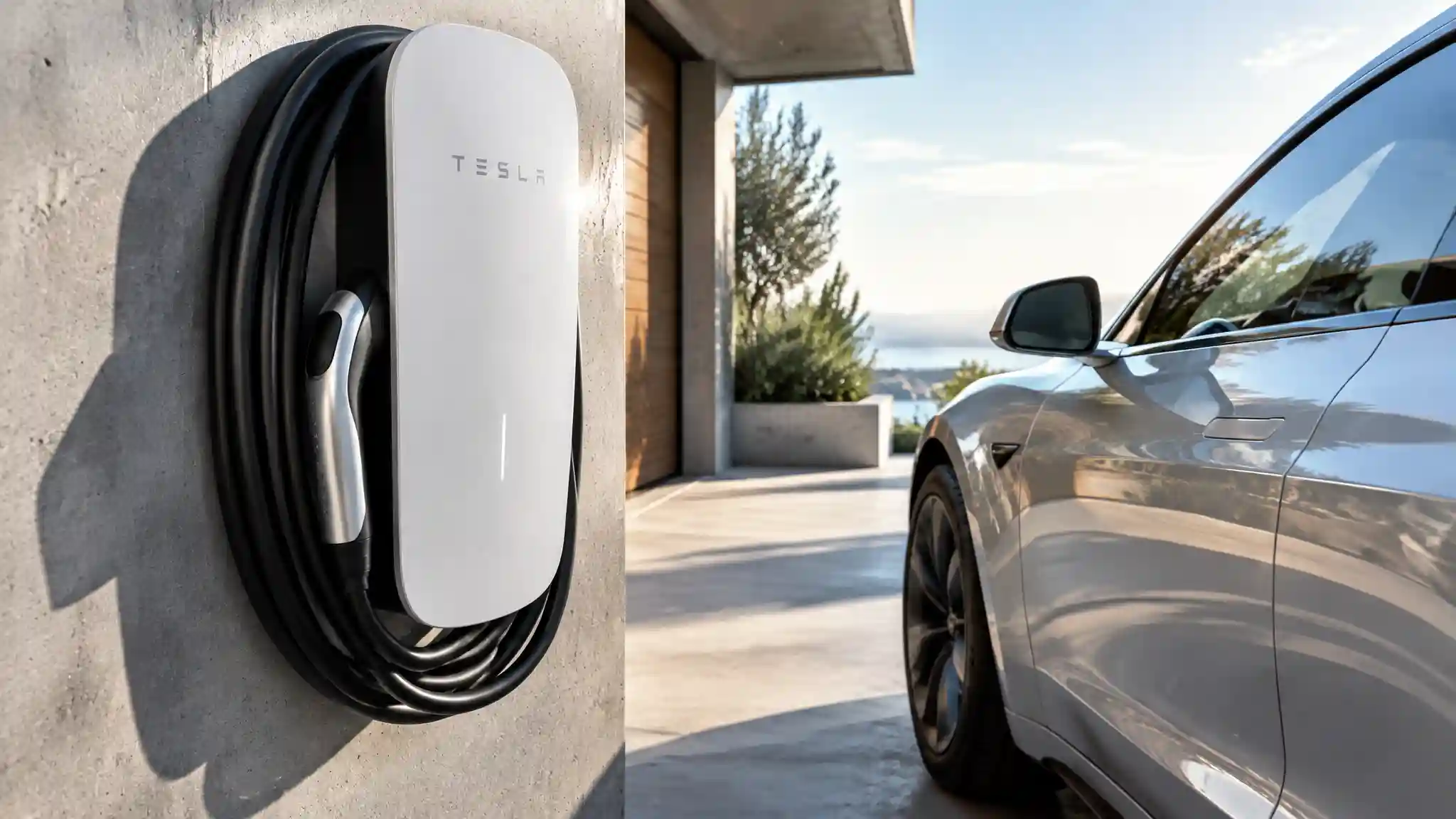
Most UK homes are fed by a single-phase supply protected by a main cutout fuse rated at 60, 80 or 100 amps. A standard 7 kW home charger draws around 32 A continuously for hours at a time. Add an electric shower at 40 A or more, an induction hob drawing 20 to 30 A during cooking, and a heat pump compressor running on a cold evening, and peak household demand can approach or exceed the fuse rating. 22 kW chargers need a three-phase supply, which few UK homes have. Where one is available, the installer must still assess the maximum demand on every phase.
The engineering answer is dynamic load balancing. A current transformer clamp on the incoming meter tails measures total household demand many times a second. When the shower or hob pushes the load towards a preset limit, the charger reduces its charging current, within the 6 to 32 A range that the charging standard allows, and ramps back up as soon as demand falls. Charging is never interrupted and the combined load stays below the supply’s rating, so there is no risk of blowing the main fuse. In many cases this also avoids a costly supply upgrade and allows the installation to proceed with simpler approval from the network operator.
Smart charging goes beyond protecting the fuse. Since 2022, UK regulations have required new home chargers to be smart by default, able to shift demand into off-peak windows and respond to signals from the grid. Paired with a time-of-use tariff, a car that is plugged in overnight charges when electricity is cheapest and cleanest, and helps flatten peaks across the local network.
For electrical contractors, load balancing is quickly becoming the default specification. For drivers, it makes home charging seamless and affordable. Explore more in our EV hub and our guide to electrifying the home.