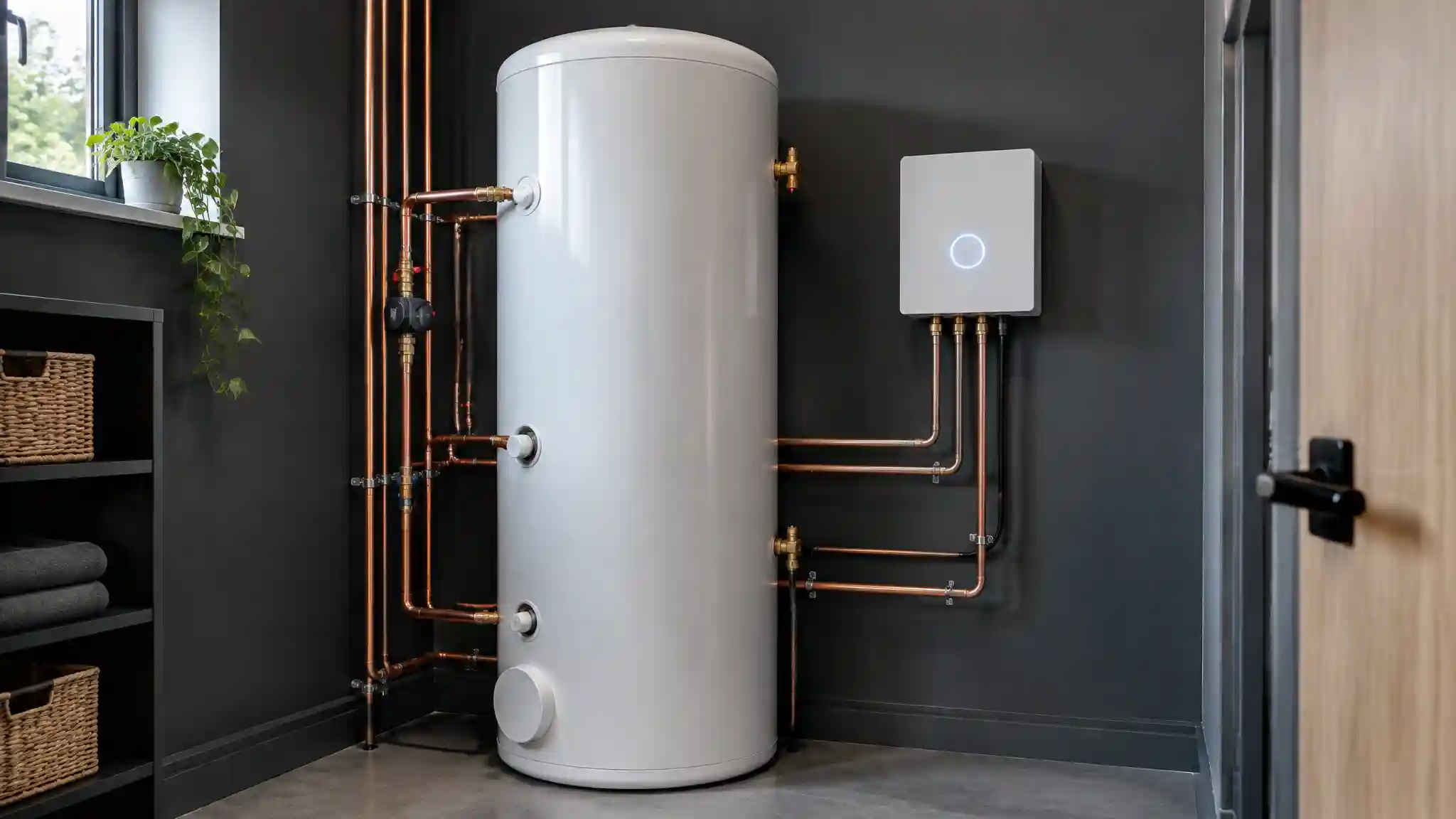
A solar diverter is a simple control device with a precise job. A current transformer (CT) clamp on the incoming grid cable at the meter measures both the size and the direction of power flow. When the household is importing, the diverter does nothing. As soon as it detects export, it sends a matching amount of power to the immersion element, using fast switching to vary the output anywhere between zero and the element’s full rating, typically 3 kW. If the surplus is 1.2 kW, the immersion receives roughly 1.2 kW, so the house stays close to zero export and draws nothing from the grid to heat the water.
The real value lies in the cylinder. Heating a 200-litre tank from 15°C to 60°C stores about 10 kWh of energy, comparable to a mid-sized lithium-ion home battery. A diverter and installation typically cost a few hundred pounds, against several thousand for chemical storage. In summer, when solar output peaks and space heating demand is near zero, the hot water tank becomes the most cost-effective battery in the house, and many homes can turn the boiler off for hot water from May to September.
The economics need an honest check. A diverter replaces whatever would otherwise heat the water, so its value depends on that fuel and on the export tariff being given up. Where gas heats the water and a Smart Export Guarantee tariff pays well, exporting can sometimes earn more than diverting saves. In homes with a heat pump, which heats water three times more efficiently than an immersion, a home battery may make better use of the surplus. Installers should also ensure the cylinder still reaches 60°C regularly for legionella control.
Specified correctly, diversion is one of the cheapest ways to make more of a solar array. For the wider picture, see our guide to electrifying the home.