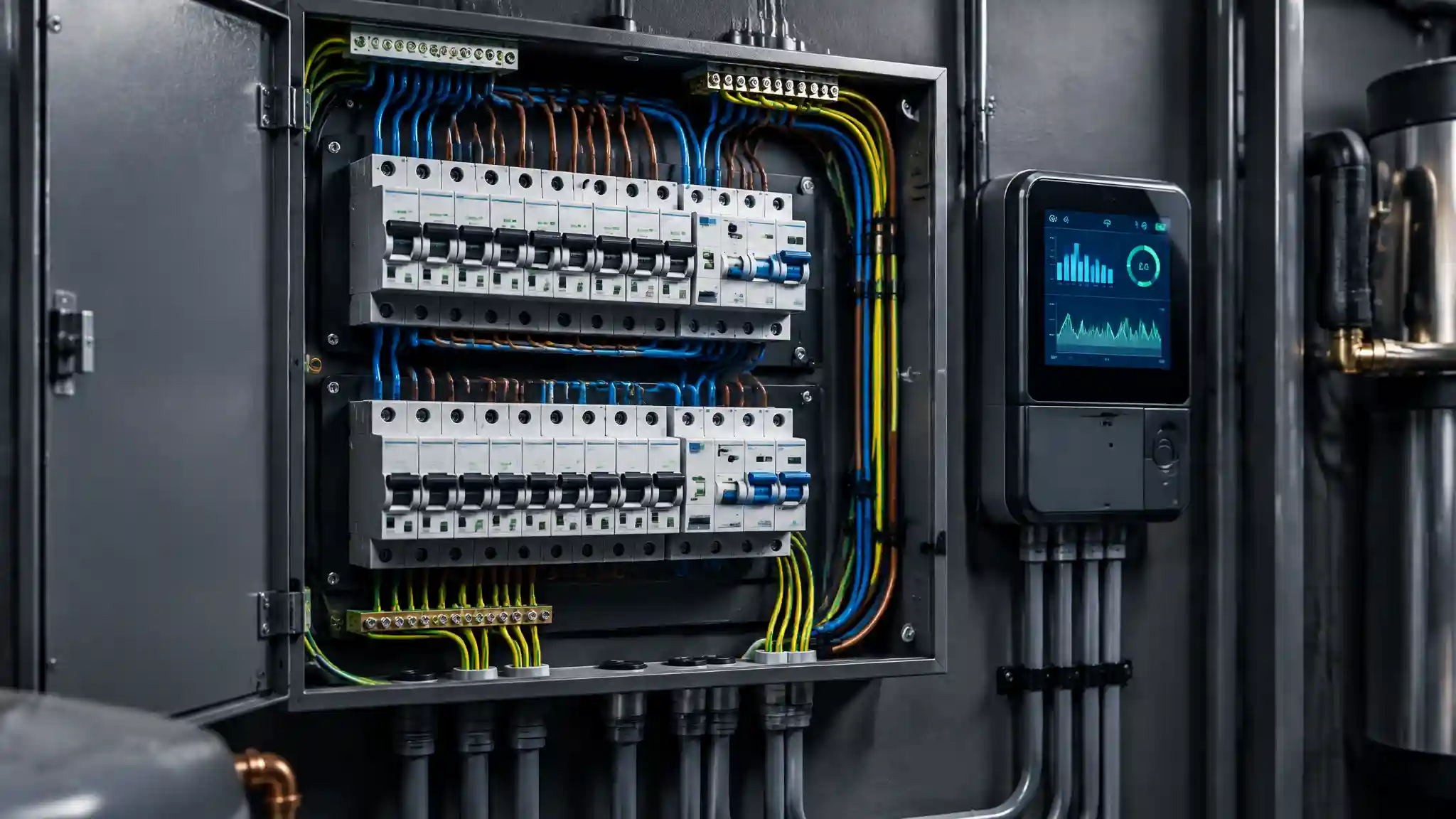
Electrification projects are usually specified appliance by appliance, but the binding constraint sits upstream at the main cutout fuse. The arithmetic is unforgiving. A 9.5kW electric shower draws about 41A at 230V. A 7.4kW EV charger adds 32A. A 9kW space-heating core adds a further 39A. Running all three together demands 25.9kW, or roughly 113A, before lighting, cooking or a heat pump compressor is counted. On a 100A service, that is a sustained overload that will eventually rupture the cutout fuse unless a dynamic load-balancing controller, typically a CT clamp on the meter tails, throttles the EV charger or defers the thermal store.
Three-phase infrastructure removes the ceiling rather than managing it. Power is delivered across three alternating phases offset by 120°, with 400V line-to-line and 230V to neutral. At 100A per phase, available capacity rises to 69kW. With loads distributed across the phases, a household can fast-charge an EV, run a high-flow shower and recharge a thermal battery at the same time without clipping charge rates.
The upgrade path runs through the Distribution Network Operator (DNO). The DNO assesses local substation and feeder capacity, and any looped service shared with a neighbouring property must be separated before capacity can be increased. Inside the property, a larger multi-pole three-phase consumer unit and new meter position need dedicated wall space, and circuits must be allocated carefully to keep the phases balanced.
Metric | Single-Phase (100A) | Three-Phase (3 × 100A) |
|---|---|---|
Voltage Delivery | 230V across a single line and neutral | 400V line-to-line (230V line-to-neutral) across three phases |
Max Power Capacity (at 100A Per Phase) | 23kW (100A × 230V) | 69kW (3 × 100A × 230V) |
Concurrent Asset Limit | Two major loads before the cutout is at risk; dynamic load balancing essential | Shower, EV charging, thermal storage and heat pump can run simultaneously when phases are balanced |
Infrastructure/DNO Cost Profile | Usually no cost for a fuse upgrade to 100A on an unlooped service | Typically several thousand pounds, rising sharply where new cabling or groundworks are needed |
Best Suited Archetype | Flats, smaller terraces and homes with one or two electrified loads | Larger detached homes, multi-EV households and full fossil-free retrofits |
For contractors and renovators, the strategic decision is whether a project's peak demand can be engineered down with load management or whether the electrical service itself is the asset that needs upgrading.